
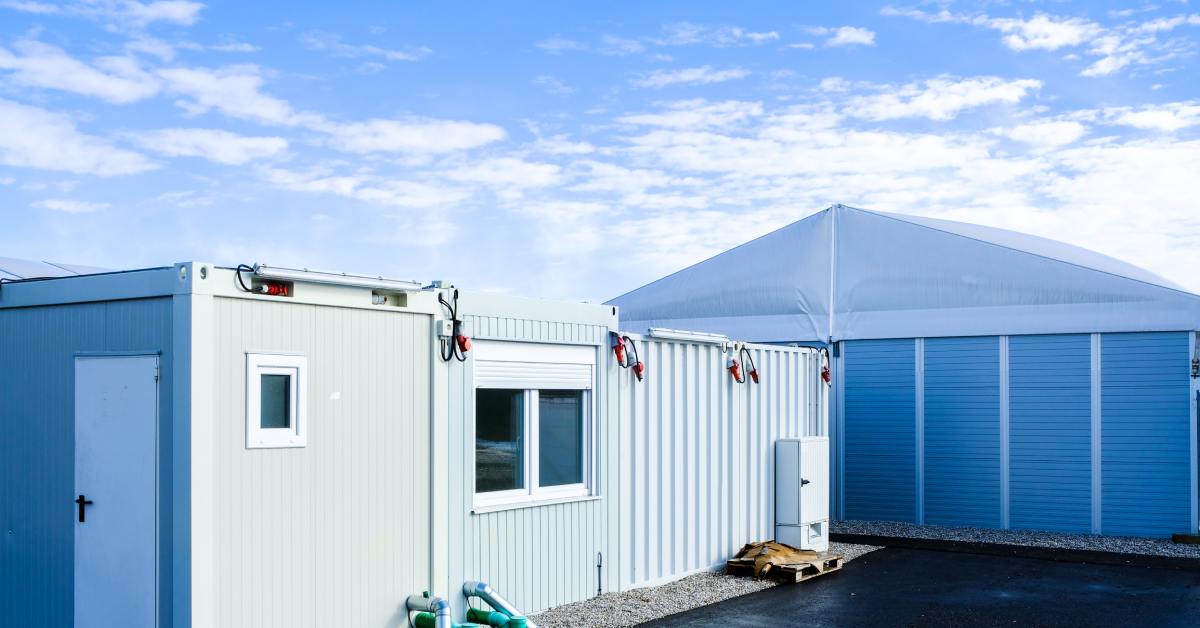
Permanent container spaces demand a different approach to heating and cooling than traditional buildings. Their steel shell, compact footprint, and modular design all affect indoor comfort. Property owners must plan for the unique HVAC needs of permanent container spaces to create spaces that stay comfortable, protect equipment, and support daily use without wasting energy.
How Steel Impacts Temperature Control
Steel reacts quickly to outdoor temperatures. On hot days, it absorbs heat fast. On cold days, it loses warmth just as quickly. That means a permanent container space can swing from too warm to too cool in a short period if the HVAC system does not match the structure.
Because of that, insulation is essential to HVAC performance. Good insulation slows heat transfer, helps maintain a stable indoor temperature, and reduces strain on the system. Air sealing is also important because even a well-sized unit will struggle if conditioned air escapes through gaps around doors, windows, or utility penetrations.
The Importance of Proper Sizing
Many people assume a small structure only needs a small HVAC unit. That approach often causes problems in container-based spaces. Size alone does not determine heating and cooling demand. Sun exposure, window placement, occupancy levels, equipment use, and insulation quality all shape how much capacity the system needs.
An oversized unit can short cycle, which reduces efficiency and leaves humidity behind. An undersized unit, on the other hand, can run constantly and still fail to keep the space comfortable. Accurate load calculations account for how the structure performs.
Ventilation and Air Quality Need Attention
Permanent container spaces often feature tight building envelopes, which helps energy efficiency but can limit fresh airflow. Without proper ventilation, indoor air can feel stale, and humidity can build up. That issue is even more important in offices, retail environments, hospitality spaces, and creative builds.
A strong HVAC strategy should include ventilation that supports healthy airflow and moisture control. Dehumidification may also need special attention, especially in regions with high humidity. When moisture lingers, comfort drops, surfaces feel clammy, and materials can wear faster over time.
Long-Term Comfort Starts With Smart Design
The best results come from integrating HVAC decisions into the full design process. Placement of ductless units, vents, returns, insulation, shading elements, and glazing should all work together. That coordination improves performance and keeps the finished space functional in every season.
If you are planning a permanent container space, focus on HVAC needs from the start. A stable system supports comfort, energy efficiency, and long-term value. For help creating a shipping container studio with reliable climate control and long-term usability, contact IPME to discuss your project goals.